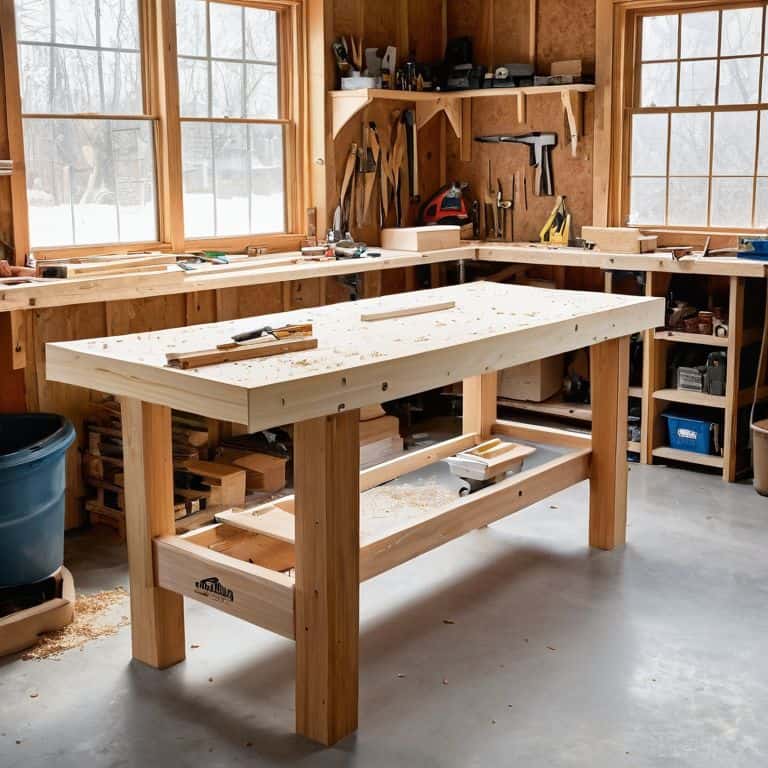
I still remember the day I decided to build my own workbench from scratch, using nothing but humble 2x4s. It was a moment of pure epiphany – I realized that I didn’t need to spend a fortune on fancy tools or materials to create something truly functional and beautiful. As I embarked on my journey to learn how to build a simple workbench from 2x4s, I encountered numerous myths and misconceptions that threatened to derail my project. But I was determined to prove that with a little creativity and elbow grease, anyone can create a stunning workbench that meets their unique needs.
In this article, I’ll share my hard-won knowledge and guide you through the process of transforming 2x4s into a workbench that will become the heart of your DIY adventures. You’ll learn how to design and build a simple, sturdy workbench that’s perfect for your specific needs, whether you’re a seasoned woodworker or a beginner looking to dip your toes into the world of DIY. I’ll cut through the noise and provide you with practical, no-nonsense advice on how to choose the right materials, assemble the frame, and add the perfect finish to your workbench. By the end of this journey, you’ll be equipped with the skills and confidence to create a workbench that’s not only functional but also a reflection of your unique style and creativity.
Table of Contents
Guide Overview: What You'll Need

Total Time: 2 hours 30 minutes
Estimated Cost: $50 – $100
Difficulty Level: Intermediate
Tools Required
- Circular Saw (for cutting 2x4s)
- Drill (with screwdriver and drill bits)
- Tape Measure (for measuring and marking lumber)
- Square (for ensuring accurate corners)
- Clamp (for holding pieces together during assembly)
- Hammer (for tapping pieces into place)
- Sandpaper (for smoothing out cut edges)
Supplies & Materials
- 2×4 Lumber (for frame and legs)
- 3/4 inch Plywood (for work surface)
- 2 1/4 inch Wood Screws (for assembling frame)
- Wood Glue (for added strength and stability)
- Finishing Nails (for attaching plywood top)
Step-by-Step Instructions
- 1. To start, gather your materials and tools, because a well-prepared workspace is a happy workspace. You’ll need 2x4s for the frame, 3/4 inch plywood for the top, a drill press, a hand saw or circular saw, a tape measure, a square, and some 2 1/2 inch screws. I like to think of this step as the treasure hunt, where you get to scour your local hardware store or rummage through your own workshop to find the perfect pieces for your project.
- 2. Next, plan your workbench design, considering the space where it will live and how you plan to use it. Think about the height, the length, and the width. Do you want it to be a sturdy, no-frills work surface, or do you envision a more complex setup with built-in storage? I find that sketching out my ideas helps me visualize the end result and makes the building process much more exciting.
- 3. Now it’s time to cut your 2x4s to the required lengths for the frame of your workbench. This is where your circular saw or hand saw comes into play. Remember to always measure twice and cut once, to avoid any mistakes. I’ve learned that taking my time during this step ensures that my project turns out sturdy and level, which is essential for a workbench that will be used frequently.
- 4. Assemble the frame of your workbench using 2 1/2 inch screws. Start by creating the legs and the aprons, then move on to the shelves and the top supports. It’s like building with giant LEGO blocks, except instead of blocks, you’re using reclaimed wood (if you’re as lucky as I am to have some on hand) or freshly cut 2x4s. This step requires some patience, but seeing your workbench start to take shape is incredibly rewarding.
- 5. Cut your 3/4 inch plywood to the desired size for the work surface. This will provide a smooth, durable top for your workbench. I like to think of this as the icing on the cake, where you get to add the final touch to your project. Make sure it’s cut accurately, as this will affect the overall stability and usability of your workbench.
- 6. Attach the plywood top to the frame using 2 1/2 inch screws. Ensure it’s securely fastened to provide a stable work surface. This is where your drill press comes in handy, allowing you to make precise holes for your screws. I find that double-checking my measurements at this stage gives me peace of mind, knowing that my workbench will withstand the test of time and various projects.
- 7. Finally, add any finishing touches, such as sanding the entire workbench to smooth out any rough edges or applying a finish to protect the wood. This is your chance to get creative and add any personal flourishes, like a built-in vice or a tray for your tools. I love this step, as it’s where you get to see your project transform from a pile of lumber into a functional, beautiful workbench that reflects your personality and style.
Crafting Your Dream Workbench
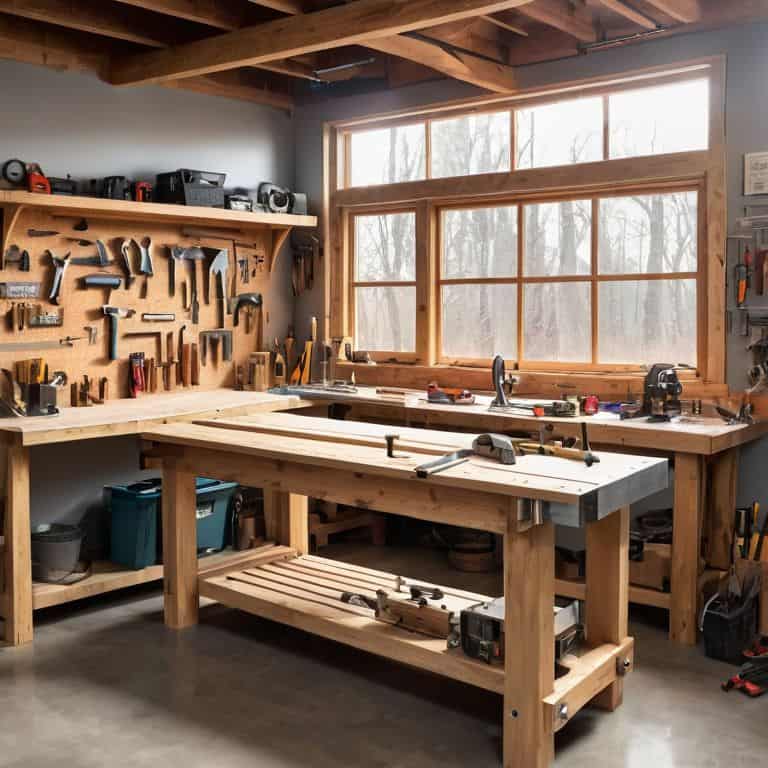
As I always say, the devil is in the details, and when it comes to crafting your dream workbench, it’s all about personalizing the space to fit your unique needs and style. Consider the type of projects you’ll be working on most often and design your workbench accordingly. For instance, if you’re a woodworker, you may want to incorporate a vice or a series of clamps to hold your pieces in place.
When thinking about workbench height and depth guidelines, remember that there’s no one-size-fits-all solution. The key is to create a comfortable working surface that allows you to stand or sit without straining your back or shoulders. You can find plenty of simple workbench designs online, but don’t be afraid to experiment and come up with your own custom solution. And if you’re a beginner, don’t worry – building a workbench for beginners is all about starting small and iterating as you go.
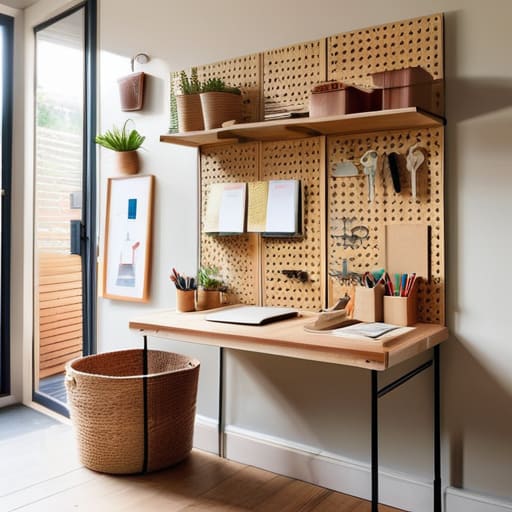
As you bring your workbench to life, think about diy workbench with storage options that will keep your tools and materials organized and within reach. You can add shelves, drawers, or even a pegboard to hang your most frequently used items. For the workbench top, consider using a durable material like hardwood or MDF, and finish it with a protective coat to prevent scratches and spills. With a little creativity, you can turn your humble 2x4s into a workbench top that’s both functional and beautiful.
Diy Storage Solutions for Makers
As I always say, a clutter-free workspace is a clutter-free mind. That’s why I’m obsessed with DIY storage solutions that keep my tools and materials within arm’s reach. For my workbench, I repurposed old pallets into shelves and drawers, adding a touch of rustic charm to my makerspace. You can do the same by upcycling containers, crates, or even mason jars to store your supplies.
By getting creative with storage, you’ll not only free up valuable work surface area but also add a personal touch to your workspace. Consider hanging baskets, magnetic strips, or a pegboard to keep frequently used items organized and easy to grab. Remember, the key to a functional workbench is striking a balance between form and function – and with a little ingenuity, you can create a storage system that’s both beautiful and practical.
Simple 2×4 Workbench Designs Unleashed
As we dive into the world of simple 2×4 workbench designs, the possibilities become endless. I love experimenting with different layouts, like the classic rectangular shape or a more modern L-shape. You can even add a splash of personality with a built-in vice or a tray for your favorite tools. The key is to think about how you’ll be using your workbench and tailor the design to fit your unique needs.
For me, the fun really starts when I begin to incorporate reclaimed wood or other eco-friendly materials into my design. Maybe you’ll add a rustic touch with an old wooden door or create a one-of-a-kind look with a mosaic of recycled tiles. Whatever your vision, remember to keep it simple, functional, and true to your personal style.
5 Essential Tips to Unlock Your 2×4 Workbench Potential
- Measure Twice, Cut Once: The Golden Rule of DIY
- Get Creative with Your 2x4s: Think Outside the Box (or Workbench)
- Sturdy Legs, Happy Maker: Ensuring Your Workbench Stands the Test of Time
- Repurpose and Reimagine: Breathing New Life into Old Materials
- Add a Personal Touch: Making Your Workbench a Reflection of Your Unique Style
Key Takeaways for Your Dream Workbench
Embracing the versatility of 2x4s, you can transform humble lumber into a workbench that’s not just functional, but a reflection of your unique DIY spirit
With a little creativity, your workbench can become more than just a workspace – it can be a hub for innovation, equipped with DIY storage solutions that keep your tools and materials organized and within reach
By combining simplicity, sustainability, and self-sufficiency, you’ll not only build a workbench, but also cultivate a mindset that turns everyday objects into extraordinary creations, inspiring a lifelong journey of making and creating
Building with Purpose
As we transform humble 2x4s into a workbench, we’re not just building a piece of furniture, we’re crafting a canvas for creativity, a sanctuary for self-sufficiency, and a testament to the magic that happens when imagination meets ingenuity.
Stanley Truman
Embracing the Joy of Creation
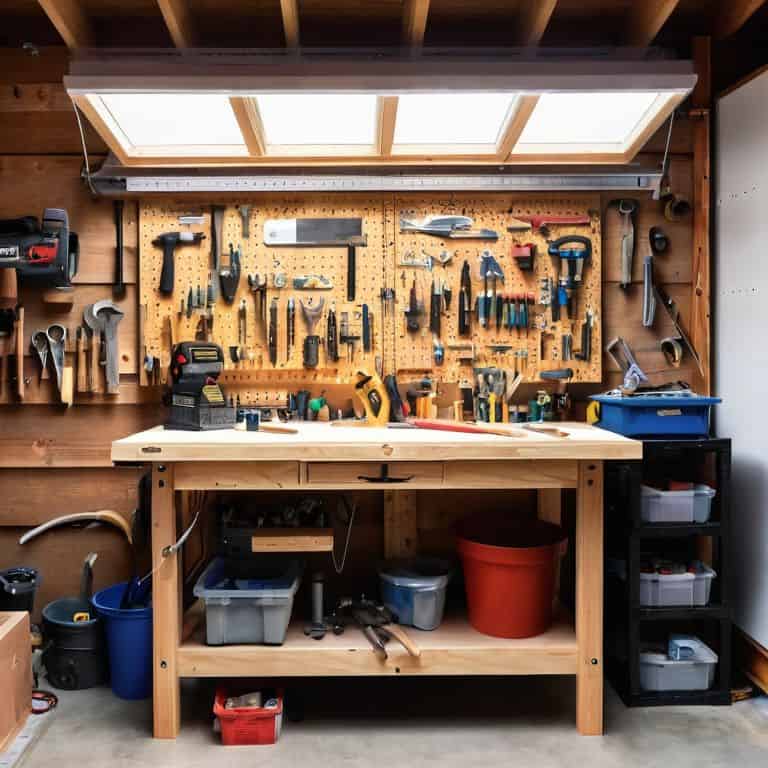
As we conclude our journey of building a simple workbench from 2x4s, let’s take a moment to reflect on the key takeaways from our adventure. We’ve transformed humble materials into a functional and personalized space that nurtures our creativity and fosters a sense of self-sufficiency. From the initial steps of gathering materials to the final touches of adding storage solutions, every moment has been an opportunity to exercise our imagination and ingenuity. By embracing the DIY spirit, we’ve not only created a workbench but also cultivated a mindset that values resourcefulness and innovation.
As you stand back to admire your handiwork, remember that the true beauty of DIY projects lies not just in the end result, but in the journey of creation itself. The scratches, the mistakes, and the triumphs – all are testaments to our capacity to reimagine and reinvent. So, let the workbench be a symbol of your potential to turn the ordinary into the extraordinary, and may it inspire you to continue exploring the infinite possibilities that lie at the intersection of creativity and sustainability.
Frequently Asked Questions
What are the essential tools I need to have in my workshop to build a simple 2×4 workbench?
My friend, let’s get started! For a simple 2×4 workbench, you’ll need some trusty tools like a circular saw, drill press, tape measure, square, and a reliable hammer. Don’t forget a pencil and safety glasses – we’re about to create something amazing!
How can I ensure my 2×4 workbench is sturdy and level, even on an uneven garage floor?
No worries, friend! To keep your 2×4 workbench sturdy and level on an uneven garage floor, try using adjustable feet or shims to stabilize it. You can also add extra support with diagonal brackets or a lower shelf, ensuring your workspace remains rock-solid and ready for creativity to flow!
What are some creative ways to add a vice or other accessories to my DIY 2×4 workbench to make it more functional?
Let’s supercharge your workbench with some ingenious additions! Consider repurposing an old clamp as a vice, or crafting a custom tool holder from a reclaimed wooden crate. You can also upcycle an old bicycle wheel into a rotating storage rack, keeping your most-used accessories within easy reach. The possibilities are endless, and I’m excited to see what you create!