I still remember the day I got lost in the winding streets of Marrakech, my map and compass in hand, but my sense of direction utterly bewildered. It was then that I realized how to use a map and compass for navigation wasn’t just about following a set of rules, but about understanding the intricate dance between the physical world and the tools we use to navigate it. As someone who’s spent years urban sketching in different cities around the world, I’ve learned to appreciate the beauty of getting lost, but also the importance of finding your way back.
In this article, I promise to share with you my hard-won wisdom on how to use a map and compass for navigation, stripping away the myths and misconceptions that often surround these ancient tools. You’ll learn how to hold your compass correctly, how to read a map with ease, and how to use them in tandem to find your way, even in the most unfamiliar of territories. My goal is to empower you with the practical skills and confidence to navigate any environment, whether you’re a seasoned traveler or just starting to explore the world beyond your doorstep.
Table of Contents
Guide Overview: What You'll Need
Total Time: 1 hour 30 minutes
Estimated Cost: $20 – $50
Difficulty Level: Intermediate
Tools Required
- Compass with degree markings and a rotating bezel
- Map topographic or road map
- Pencil for marking map
- Protractor for measuring angles
Supplies & Materials
- Extra batteries for compass
- Map case for protection
- String or twine for creating a makeshift protractor
Step-by-Step Instructions
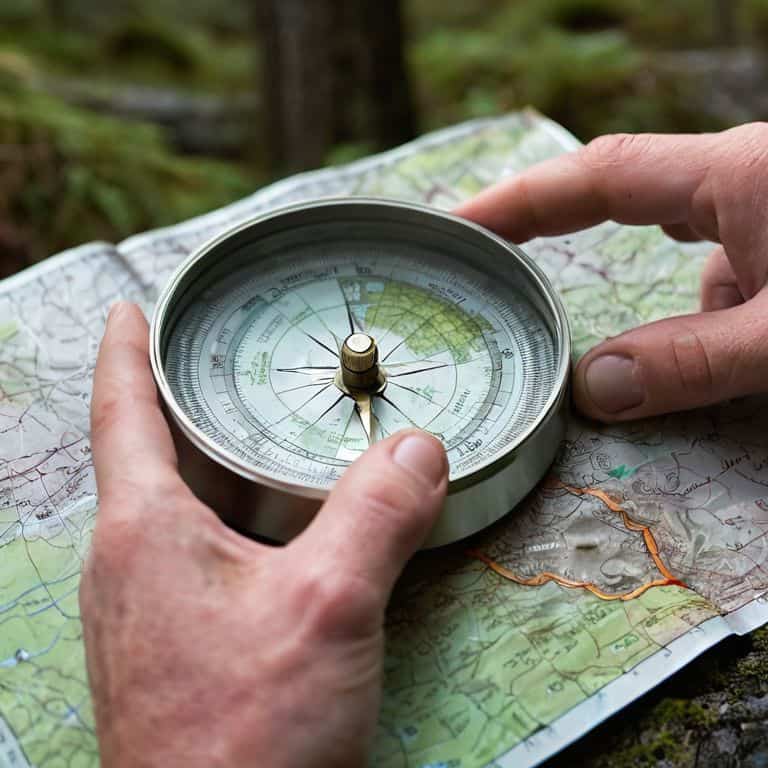
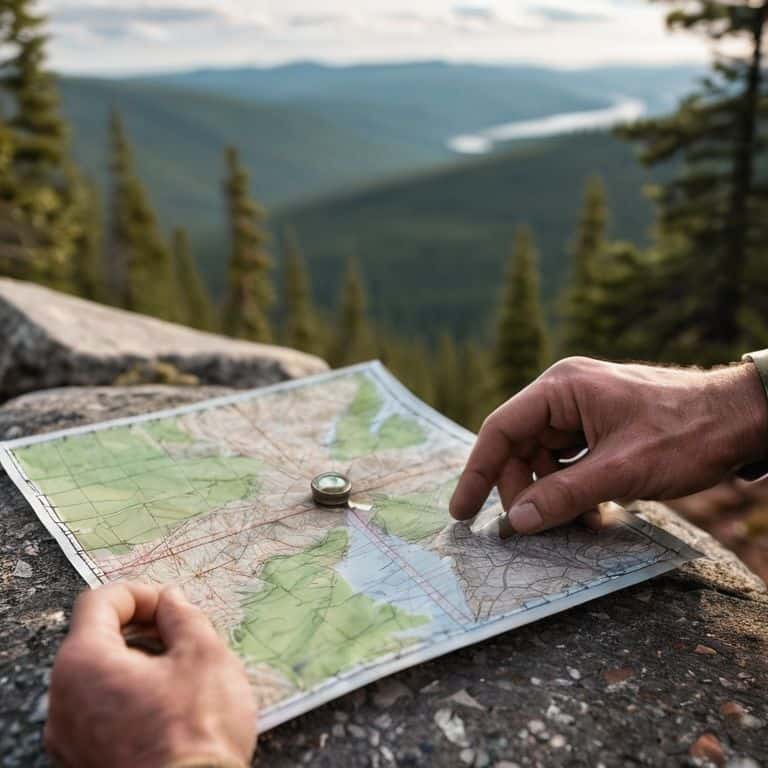
- 1. First, let’s start with the basics: understanding your map and compass. Familiarize yourself with the map’s legend, which explains the symbols and markings used to denote different features like roads, trails, and landmarks. Take note of the compass’s components, including the direction-of-travel arrow, the rotating bezel, and the magnetic needle.
- 2. Next, set your map to the correct orientation by placing it on a flat surface and turning it so that the top edge aligns with the direction you think is north. Then, place your compass on the map, with the direction-of-travel arrow pointing towards the top edge of the map. This step is crucial for ensuring that your map and compass are aligned, allowing you to accurately navigate.
- 3. Now, it’s time to determine your location on the map. Look for recognizable features like roads, rivers, or buildings, and try to match them up with the corresponding symbols on the map. Use the compass to take a bearing on a known landmark, and then use that bearing to triangulate your position on the map. This process may take some practice, but it’s an essential skill for navigation.
- 4. With your location determined, you can now use your compass to take a bearing on your destination. Place the compass on the map, with the direction-of-travel arrow pointing towards your destination, and rotate the bezel until the magnetic needle aligns with the magnetic north indicator. Read the bearing from the bezel, and use it to guide you towards your destination.
- 5. As you navigate, it’s essential to stay on course by regularly checking your bearing and adjusting your route as needed. Use the compass to take occasional readings, and make sure to account for any obstacles or detours that may throw you off course. Remember to always keep your wits about you and trust your instincts – navigation is as much about common sense as it is about technical skills.
- 6. When navigating in unfamiliar territory, it’s a good idea to use landmarks and waypoints to guide you. Identify prominent features like mountains, valleys, or buildings, and use them to break up your journey into manageable sections. Use your compass to take bearings on each waypoint, and check your progress regularly to ensure you’re staying on track.
- 7. Finally, don’t forget to keep a record of your journey, whether it’s by taking notes, drawing a map, or simply jotting down key landmarks and bearings. This will help you keep track of your progress, and provide a valuable reference point if you need to retrace your steps or navigate back to your starting point. Plus, it’s a great way to reflect on your adventure and plan your next one.
Navigating Wonder
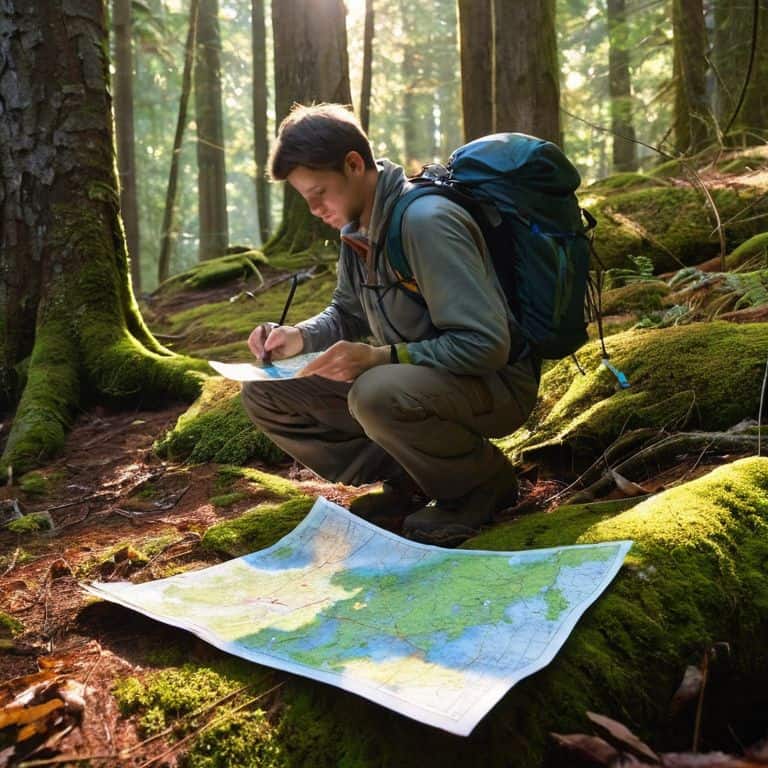
As I sit here, surrounded by my collection of vibrant teapots from around the world, I am reminded of the thrill of discovering hidden wonders. Navigating with a map and compass is not just about reaching your destination, but about the journey itself. It’s about immersing yourself in the unknown, taking in the sights and sounds of the natural world, and uncovering secrets that lie just beyond the edge of the map. For hikers, map reading techniques are essential for staying on track and finding the best routes.
As the sun begins to set, navigating with a map and compass at night requires a different set of skills. It’s essential to understand understanding compass declination and how to use landmarks to guide you through the darkness. By using the position of the stars and the silhouette of the landscape, you can continue to navigate even when the sun is gone. This is where basic navigation skills for beginners come into play, as it’s crucial to have a solid foundation in map reading and compass use.
Whether you’re a seasoned explorer or just starting out, using landmarks for navigation is a valuable technique to master. By recognizing familiar features on the map, such as rivers, mountains, or valleys, you can orient yourself and stay on course. Topographic map symbols and meanings can also help you decipher the landscape and make informed decisions about your route. As you practice and hone your skills, you’ll find that navigating with a map and compass becomes second nature, allowing you to focus on the beauty of the journey and the wonders that await you around every bend.
Compass Declination Demystified
As I wander through the wilderness, my trusty compass in hand, I’ve often found myself pondering the mysteries of declination. It’s a concept that can seem daunting at first, but trust me, it’s a game-changer once you grasp it. Essentially, declination refers to the difference between magnetic north and true north, and it varies depending on your location. I recall a particularly memorable hike in the Scottish Highlands, where a slight miscalculation due to declination led to a delightful detour through a hidden glen.
By taking the time to understand and adjust for declination, you’ll unlock a new level of precision in your navigation skills. It’s a small but significant detail that can make all the difference between getting lost and finding your way. As I sit here, sipping tea from my favorite Turkish teapot, I’m reminded of the importance of attention to detail and the joy of uncovering hidden secrets in the great outdoors.
Map Reading Secrets for Hikers
As I delved into the world of map reading, I discovered that it’s not just about deciphering symbols and scales, but about uncovering the hidden stories of the land. For hikers, being able to read a map is like having a treasure map to secret waterfalls, hidden meadows, and breathtaking vistas. I recall a particular hike in the Scottish Highlands, where a subtle contour line on the map led me to a secluded loch, its waters shimmering like a canvas of molten silver.
By paying attention to the subtle details on a map, hikers can unlock the secrets of the terrain, anticipating challenges and marvels alike. Whether it’s identifying potential water sources or avoiding treacherous terrain, map reading is an art that requires patience, practice, and a sense of wonder. As I sit here, sipping tea from my favorite Moroccan teapot, I am reminded of the countless hours I’ve spent pouring over maps, dreaming of the next adventure, and the stories that await discovery.
Finding Your Way: 5 Essential Tips for Map and Compass Navigation
- Always Orient Your Map: Before you start navigating, make sure your map is aligned with the surroundings by identifying notable landmarks and features
- Understand Your Compass: Familiarize yourself with the different parts of your compass, including the direction-of-travel arrow, the rotating bezel, and the magnetic needle
- Measure Distances Accurately: Learn how to use the scale on your map to measure distances and calculate your pace, taking into account the terrain and any obstacles you may encounter
- Use Natural Navigation Aids: Don’t rely solely on your map and compass – learn to recognize natural navigation aids like the sun, stars, and landmarks to help guide you
- Practice, Practice, Practice: The key to becoming proficient in map and compass navigation is practice, so get out there and start exploring – the more you practice, the more confident you’ll become
Three Essential Navigation Nuggets
Always remember to consider compass declination when using your compass, as this will ensure your readings are accurate and you stay on course
Developing your map reading skills is key to successful navigation, and this includes understanding symbols, scales, and contours to paint a vivid picture of the terrain
Practicing navigation in different environments and conditions will help you hone your skills and build confidence, whether you’re hiking through familiar trails or venturing into uncharted territories
Finding Your Way
The map and compass are not just tools for navigation, but keys to unlocking the hidden stories of the earth, and the greatest adventure is not in the destination, but in the journey of discovery itself.
Julie Wright
Embracing the Art of Navigation
As I reflect on our journey through the world of map and compass navigation, I’m reminded of the importance of practice and patience. We’ve covered the essential steps to get you started, from understanding your map and compass to applying critical thinking in the field. The subsections on ‘Map Reading Secrets for Hikers’ and ‘Compass Declination Demystified’ provided valuable insights into the nuances of navigation, empowering you to venture into the unknown with confidence. Whether you’re a seasoned explorer or just beginning to uncover the thrill of discovery, the art of navigation is a skill that will enrich your travels and deepen your connection with the world around you.
As you close this guide and prepare to embark on your own navigational adventures, remember that the true magic lies not in the tools themselves, but in the stories they help you uncover. The maps, the compass, and the landscapes they reveal are mere catalysts for the journey of self-discovery and the unforgettable experiences that await you. So, go forth, get a little lost, and find your way again – for in the words of a wise navigator, ‘the greatest adventure is what lies ahead, and the journey is just the beginning’.
Frequently Asked Questions
What are some common mistakes to avoid when using a map and compass for navigation?
As I’ve learned from my own adventures, common mistakes to avoid include holding the compass too close to metal objects, not accounting for declination, and misreading contour lines – all of which can lead to navigational nightmares! I recall a particularly harrowing experience in the Scottish Highlands where a simple mistake led me astray for hours.
How do I account for magnetic variation when using my compass in different parts of the world?
Magnetic variation, my friend, is like the secret ingredient in your favorite recipe – it can make all the difference. To account for it, simply adjust your compass with the local declination, which you can find on your map or online, and you’ll be navigating like a pro in no time, whether in the mountains of Tibet or the streets of Tokyo.
Can I rely solely on my smartphone's GPS, or are there situations where a map and compass are still essential?
While smartphones are handy, there are situations where a map and compass shine – like in remote areas with no signal or when batteries die. Trust me, I’ve been there! A map and compass are timeless, reliable tools that can be a lifesaver in the wilderness, and with a little practice, you’ll be navigating like a pro.