As I sit here, surrounded by the soothing sounds of nature and the gentle whisper of vintage botanical illustrations on my wall, I’m reminded of the countless times I’ve struggled to sharpen a kitchen knife with a whetstone. It’s a task that’s often shrouded in mystery, with many of us believing it’s an art form reserved for the culinary elite. But, I’m here to tell you that it’s not as daunting as it seems. In fact, learning how to sharpen a kitchen knife with a whetstone is a simple, yet empowering process that can breathe new life into your cooking routine.
In this article, I promise to guide you through the no-nonsense process of sharpening your kitchen knife with a whetstone. You’ll learn the basics of knife sharpening, from choosing the right whetstone to mastering the perfect sharpening technique. My goal is to provide you with honest, practical advice that’s free from jargon and fuss, so you can get back to cooking with confidence and joy. Whether you’re a seasoned chef or a curious beginner, I invite you to join me on this journey to discover the simple pleasure of sharpening your kitchen knife with a whetstone.
Table of Contents
Guide Overview: What You'll Need
Total Time: 30 minutes to 1 hour
Estimated Cost: $20 – $50
Difficulty Level: Intermediate
Tools Required
- Whetstone (preferably with two different grit sides)
- Sharpening Steel (optional, for honing the edge)
- Knife (the kitchen knife to be sharpened)
Supplies & Materials
- Water (for soaking the whetstone)
- Cleaning Cloth (for drying the knife and whetstone)
Step-by-Step Instructions
- 1. First, let’s start by preparing our whetstone and knife for the sharpening process. I like to think of this step as setting the stage for a beautiful waltz between the stone and the blade. Begin by submerging the whetstone in water for about 10-15 minutes to allow it to absorb the liquid and become ready for use. While we wait, take a moment to inspect your kitchen knife, noticing the angle of the blade and the areas that need the most attention.
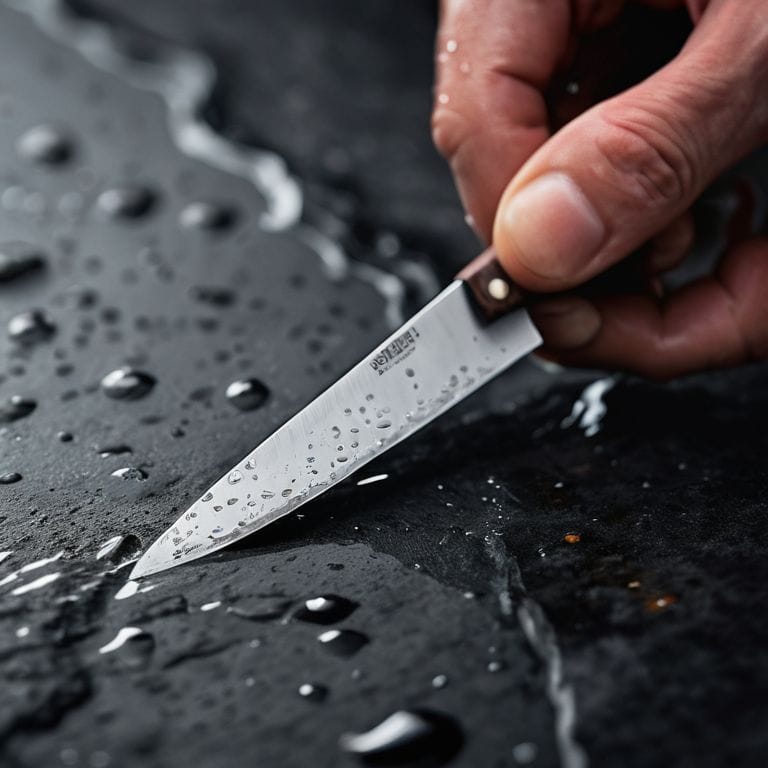
- 2. Once our whetstone is ready, it’s time to position the knife correctly. Hold the knife at the desired sharpening angle, which is usually around 20 degrees for a straight-edge knife, and place it on the stone with the bevel (the flat side of the blade) facing upwards. Take your time to get the angle just right, as this will affect the overall sharpness of the knife.
- 3. Now, let’s start the sharpening process by slowly drawing the knife across the stone in a smooth, light touch motion. Apply gentle pressure, increasing it slightly as you become more comfortable with the movement. Remember to keep the knife at the same angle throughout the stroke, using the entire length of the stone to ensure an even sharpening.
- 4. As we continue to sharpen the knife, it’s essential to check our progress regularly. To do this, stop the sharpening process and inspect the blade by holding it up to a light source. Look for a uniform scratch pattern along the length of the knife, which indicates that the stone is working effectively. If the scratches appear uneven, adjust the angle or pressure as needed.
- 5. Next, we’ll switch to the finer side of the whetstone to hone the edge of the blade. This step is all about refining the edge, making it razor-sharp and ready for use. Apply the same gentle pressure and smooth motion as before, but this time, focus on using a slightly lighter touch to avoid applying too much pressure.
- 6. After several strokes on the finer side of the stone, our knife should be nearing its optimal sharpness. To test the edge, carefully cut a piece of paper or a soft vegetable, like a tomato. If the knife glides through effortlessly, we’ve achieved a razor-sharp edge. If not, continue to sharpen and hone the blade until it reaches the desired level of sharpness.
- 7. Finally, let’s not forget to clean and maintain our whetstone after use. Simply rinse it with water, dry it thoroughly, and store it in a cool, dry place. By taking care of our stone, we ensure it will remain effective for many sharpening sessions to come, and our kitchen knives will always be ready to slice, dice, and chop their way through any recipe.
Whispers From the Whetstone
As I sit amidst my collection of vintage botanical illustrations, I find inspiration in the gentle curves of leaves and the soft whispers of the natural world. When it comes to maintaining a sharp knife edge, I’ve learned that patience and practice are key. The soft grit of a whetstone is like a summer breeze on a warm morning, gently coaxing the knife’s edge back to life.
In my experience, knife sharpening techniques for beginners often focus on the basics of angle and pressure, but it’s equally important to consider the type of knife you’re working with. Different knives require unique approaches, and understanding these nuances can make all the difference in achieving a razor-sharp edge. Whether you’re working with a delicate paring knife or a sturdy chef’s knife, the goal is always to create a seamless union between the knife and the whetstone.
As I work on my latest botanical art piece, using found natural materials to craft a whimsical floral arrangement, I’m reminded of the importance of whetstone selection. Choosing the right whetstone can be a daunting task, especially for those new to knife sharpening. But with a little guidance and experimentation, you’ll find that the right whetstone can become a trusted companion in your kitchen, helping you to unlock the full potential of your knives and cook with precision and ease.
Ancient Rhythms for Beginners
As I sit amidst my collection of vintage botanical illustrations, I find myself drawn to the gentle curves of a whetstone, reminiscent of the smooth stones I’d find on childhood beachcombing adventures. For those just beginning their whetstone journey, I recommend starting with a soft, soothing touch – much like the first delicate petals of a flower unfolding. Allow the stone to guide your knife, listening to the subtle whispers of the sharpening process. It’s a meditation in motion, a waltz of steel and stone that awakens the senses and connects us to the natural world.
In this peaceful rhythm, we find a sense of harmony, much like the ebb and flow of the tides. As a beginner, don’t be afraid to experiment and find your own unique cadence with the whetstone. With each gentle stroke, you’ll not only sharpen your knife but also cultivate a deeper appreciation for the simple, earthly beauty of this ancient craft.
Harmonious Knife Edge Secrets
As I gently stroke the whetstone, I’m reminded of the soothing sounds of the ocean’s waves back in my coastal hometown. The rhythmic motion of sharpening my kitchen knife becomes a meditative dance, where every stroke is a celebration of harmony between tool and hand. The whisper-soft scrape of the blade against the stone is music to my ears, a symphony of steel and stone in perfect synchrony.
In this serene state, I uncover the secrets to a harmonious knife edge – a delicate balance of pressure, angle, and patience. With each careful stroke, my knife transforms, its edge growing sharper, more refined, and ready to slice through the vibrant flavors of my kitchen creations.
Sharpening Symphony: 5 Whetstone Whispers for a Razor-Sharp Edge
- Let the stone sing: always sharpen your knife with the whetstone submerged in water, allowing the gentle lapping of the liquid to serenade your sharpening process
- Find your flow: maintain a consistent angle of about 20 degrees for straight-edged knives, but don’t be afraid to experiment and find the perfect harmony for your curved or serrated blades
- Listen to the scratch: pay attention to the sound of the whetstone as you sharpen – a smooth, even scratch is music to your ears, while a jagged or skipping sound indicates it’s time to adjust your stroke
- Awaken the edge: use light, gentle strokes to awaken the dormant edge of your knife, gradually increasing pressure as the blade begins to sing with sharpness
- Seal the deal: after sharpening, wipe your knife clean and inspect the edge – if it’s still not razor-sharp, don’t be discouraged, simply repeat the process, and remember that patience and practice are the ultimate sharpening secrets
Embracing the Harmony of Sharpening: 3 Key Takeaways
Sharpening your kitchen knife with a whetstone is not just about function, but also about fostering a connection with the natural world and the ancient rhythms that guide us
By embracing the process as a mindful, meditative practice, you can transform a mundane chore into a celebration of simplicity and sustainability, much like the gentle lapping of waves against the shore
Whether you’re a seasoned chef or a curious beginner, the art of sharpening with a whetstone offers a unique opportunity to slow down, appreciate the beauty in everyday tasks, and cultivate a deeper sense of harmony in your kitchen and beyond
Sharpening with Soul
As we sharpen our knives with the gentle touch of a whetstone, we’re not just honing edges, we’re harmonizing with the rhythms of nature – where every stroke is a celebration of patience, persistence, and the beauty of the imperfectly perfect.
Harper Willow
Embracing the Rhythm of Sharpening
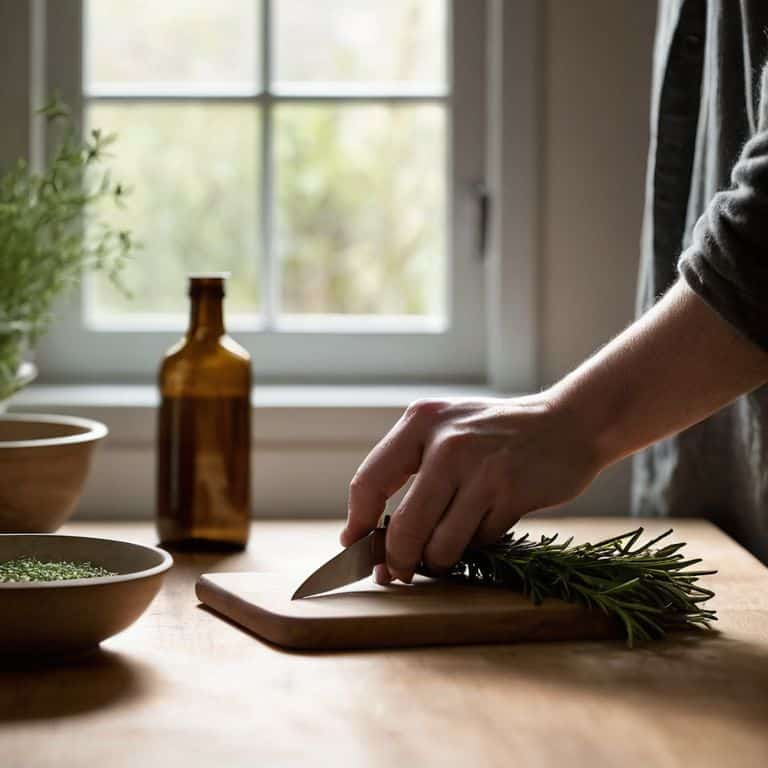
As we’ve journeyed through the steps of sharpening a kitchen knife with a whetstone, we’ve uncovered the ancient rhythms that connect us to the natural world. From understanding the grit sequence to mastering the angle of sharpening, each moment is an opportunity to slow down and appreciate the beauty in the everyday. By embracing this process, we not only hone our knives but also cultivate a deeper sense of patience and mindfulness in our daily lives.
As you put down the whetstone and hold your now razor-sharp knife, remember that the true magic lies not in the tool itself, but in the connection to the earth that it represents. May the gentle scratch of the whetstone on steel become a reminder of the harmony that can be found in the simplest of actions, and may your kitchen become a sanctuary where nourishment and nature blend together in perfect symphony.
Frequently Asked Questions
What is the optimal angle to hold the knife against the whetstone for the most effective sharpening?
The sweet spot is usually between 20 to 30 degrees, depending on the knife’s bevel. I like to think of it as finding the gentle lean of a seaside dune – just the right incline to let the whetstone’s magic unfold. Experiment with slight adjustments to discover your knife’s perfect harmony.
How often should I sharpen my kitchen knife to maintain its edge and prevent it from becoming too dull?
The frequency of sharpening depends on how often you use your knife – for daily cooks like me, a quick touch-up every week or two keeps the edge vibrant, while less frequent users might get away with monthly sharpening, all depending on the knife’s material and your cutting style, of course!
Can I use a whetstone to sharpen other types of knives, such as serrated or ceramic knives, or is it best suited for straight-edged steel knives?
While whetstones work beautifully for straight-edged steel knives, they’re not the best fit for serrated or ceramic knives. Serrated knives require a specialized sharpener that navigates their unique texture, and ceramic knives are often better suited for diamond stones or gentle honing rods to avoid chipping.