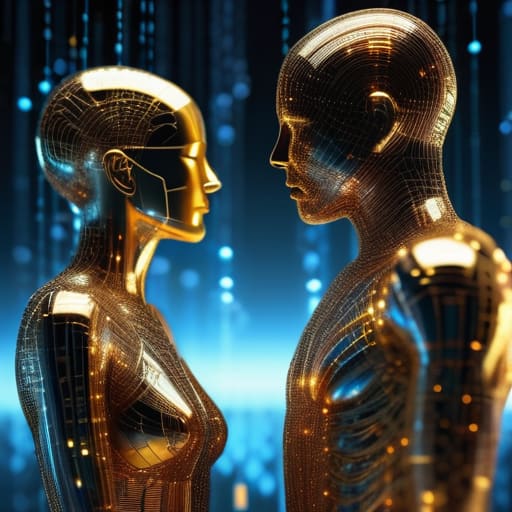
I was sitting in a virtual reality lounge last week, watching a group of avatars interact, when it hit me: we aren’t just “connecting” anymore; we are being curated. There is this pervasive, shiny myth that these digital matchmaking tools are expanding our global village, but I’ve spent too many years analyzing the data to buy into that hype. In reality, we need to talk about the invisible hand of the code and how recommendation systems shape who you meet by narrowing our social bandwidth. It’s not just about finding a date or a new friend; it’s about whether we are being funneled into digital echo chambers that reflect only what we already believe.
I’m not here to give you a lecture on algorithmic complexity or sell you on some expensive “optimization” seminar. Instead, I want to pull back the curtain using my background in future studies to show you the actual mechanics of this social engineering. I promise to provide a data-driven, no-nonsense look at how these systems influence our human connections and, more importantly, how you can reclaim your agency in an increasingly automated social landscape.
Algorithmic Bias in Social Networking and Human Connection

When we start to see the patterns of how these digital architectures influence our intimacy, it’s easy to feel a bit overwhelmed by the sheer scale of the data. I often find myself looking for ways to reclaim a sense of intentionality in my own digital interactions, rather than just letting the math decide my next move. If you’re looking to navigate these more complex, unfiltered spaces with a bit more confidence, I’ve found that exploring platforms like AdultChatCanada can offer a different kind of perspective on how we seek connection outside of the standard, sanitized social media loops. It’s all about finding those niche corners where you can actually steer the ship instead of just drifting along the algorithmic current.
When we peel back the sleek interface of our favorite platforms, we encounter a much more complex reality: the invisible hand of algorithmic bias in social networking. As a futurist, I find it fascinating—and frankly, a little unsettling—how these mathematical models don’t just reflect our preferences; they actively narrow them. By prioritizing engagement above all else, these systems often inadvertently favor certain demographics or personality types, creating a feedback loop that can stifle diversity in our social circles. We aren’t just being “helped” to find people; we are being subtly steered toward a very specific, often homogenized, version of connection.
This brings us to the tension between digital serendipity vs algorithmic curation. In the physical world, you might meet a lifelong friend simply because you both happened to be standing in the same rainstorm or reading the same obscure book. But in the digital realm, that magic is being replaced by hyper-optimized paths. While it feels efficient to be matched with “people like us,” we risk losing the transformative power of the unexpected. If we only ever encounter the reflections of our own existing beliefs, we aren’t truly discovering the world—we’re just wandering through a mirror.
The Impact of Machine Learning on Human Relationships
When we peel back the layers of these complex neural networks, we start to see how the impact of machine learning on human relationships goes far deeper than just suggesting a new friend or a potential partner. We aren’t just interacting with code; we are interacting with a mathematical mirror of our own subconscious preferences. Machine learning models are designed to maximize engagement, which often means they prioritize the “safe” choice—the person who shares your exact hobbies, political leanings, or even your specific sense of humor. While this feels seamless in the moment, I worry we are trading the beautiful friction of human growth for a sterilized version of connection.
This brings us to a fascinating tension: the battle between digital serendipity vs algorithmic curation. In a truly organic world, you might meet someone who challenges your worldview or introduces you to a passion you never knew existed. However, as these systems refine their predictive capabilities, they tend to tighten the loop. Instead of opening doors to the unknown, we risk becoming trapped in a cycle of hyper-optimization, where our social circles become increasingly predictable and, ultimately, less transformative.
Reclaiming Your Social Agency: 5 Ways to Break the Algorithmic Loop
- Audit your “digital echo chamber” by intentionally engaging with content or profiles that challenge your current worldview; it’s the social equivalent of stepping outside your comfort zone to see a new horizon.
- Practice “algorithmic friction” by occasionally searching for topics or communities completely unrelated to your usual patterns, forcing the machine to recalibrate its assumptions about who you are.
- Prioritize serendipity over efficiency by choosing to join niche, interest-based groups rather than relying solely on the “People You May Know” suggestions that prioritize high-probability matches.
- Treat your data footprint like a garden; regularly prune your follows and likes to ensure you aren’t inadvertently training your recommendation engine to keep you stuck in a repetitive social cycle.
- Foster offline-first connections to ground your social life in physical reality, ensuring that the most meaningful parts of your human experience aren’t being mediated entirely by a predictive model.
Navigating the Digital Crossroads
As we’ve unpacked, the invisible hands of machine learning are doing far more than just suggesting a new song or a movie; they are actively curating the fabric of our social reality. We’ve seen how algorithmic bias can inadvertently create echo chambers that stifle diversity, and how the predictive nature of these systems can subtly steer our interpersonal connections toward the familiar rather than the transformative. It is a delicate dance between the convenience of personalized discovery and the risk of intellectual and social stagnation. We cannot ignore that the data driving these engines is a reflection of our own past, which means, without intentionality, our algorithms might just be replaying our history instead of helping us write a new one.
So, where does this leave us? I truly believe we are standing at a pivotal threshold. We don’t have to be passive passengers in an algorithmically driven world; instead, we can become the conscious architects of our own digital experiences. Let’s use these tools to broaden our horizons rather than narrow them, seeking out the “glitches” in the system that introduce us to unexpected perspectives. My hope is that we can leverage this technology to build a future where connection is not just efficient, but deeply, authentically human. Let’s keep our eyes open, our minds curious, and—as I always say—never be afraid to mismatch the pattern.