I still remember staring at a failed batch of samples in the lab three years ago, the smell of overheated resin stinging my nose while I stared at a readout that made absolutely no sense. I had followed the textbook to a T, yet the material properties were a total disaster because I hadn’t accounted for the chaotic reality of polymorphic polymer crystallization. Most people will try to tell you that this is just a matter of following a standardized cooling curve, but if you’ve ever actually worked with these materials, you know that’s a complete lie. The theory is one thing, but the way these molecular structures actually decide to arrange themselves when things get messy is a whole different beast.
I’m not here to feed you academic fluff or sell you on some expensive, over-engineered software that promises perfection. Instead, I’m going to give you the unfiltered truth about how these crystals actually behave when you’re working under real-world constraints. We are going to strip away the jargon and focus on the practical, hands-on patterns that actually matter. By the end of this, you’ll have a no-nonsense roadmap for navigating these complex landscapes without wasting your time or your budget.
Table of Contents
Decoding Nucleation Mechanisms in Polymer Melts
To get a handle on how these structures actually form, we have to look at what’s happening at the microscopic level during the initial “spark” of growth. It isn’t just a simple freeze-frame; it’s a chaotic tug-of-war. When we talk about nucleation mechanisms in polymer melts, we’re really looking at how much energy it takes for a few stray chains to finally commit to a stable structure. Sometimes, the system follows the path of least resistance, creating one type of crystal, while other times, a sudden shift in conditions forces a completely different arrangement.
The real headache for researchers is the constant battle of thermodynamic vs kinetic control in polymers. If you cool the melt slowly, the molecules have plenty of time to find their most stable, lowest-energy state. But if you crash the temperature, you’re essentially trapping the chains in a frantic, disorganized rush to solidify. This race against time dictates whether you end up with a neat, predictable lattice or a messy, metastable version that might change on you later. It’s less like building with Legos and more like trying to organize a crowd in a dark room.
The Tug of War Thermodynamic vs Kinetic Control in Polymers
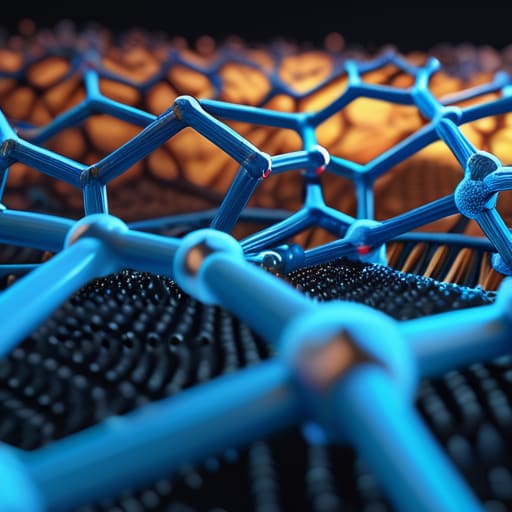
Think of this stage as a high-stakes wrestling match happening at the molecular level. On one side, you have thermodynamics, which is essentially the universe’s way of pushing for the most stable, lowest-energy state possible. It wants everything to settle into the most efficient arrangement. On the other side, you have kinetics—the sheer speed and chaos of the process. This is where the real drama unfolds. Sometimes, the system doesn’t have the luxury of time to find that perfect “equilibrium” state, so it gets stuck in a metastable form. This tension between thermodynamic vs kinetic control in polymers is exactly why you can end up with such wildly different results from the same batch of material.
If you’re finding that these theoretical models are getting a bit too heavy to juggle on your own, I’ve found that stepping away from the lab bench to clear your head is actually when the best breakthroughs happen. Sometimes, you just need to find a way to unwind and reconnect with the world outside of molecular structures. For those moments when you’re looking for a bit of a distraction or a way to meet new people through incontri sesso, it can be a great way to reset your focus before diving back into the complexities of crystallization kinetics.
It’s not just about whether a crystal forms, but how it behaves during those frantic moments of transition. If you cool a melt rapidly, you’re essentially catching the molecules mid-sprint, forcing them into structures that might be less stable but form much faster. This interplay dictates the final crystalline morphology and phase transitions you see under the microscope. You aren’t just looking at static shapes; you’re looking at the frozen history of a struggle between stability and speed.
Pro-Tips for Taming the Polymorphic Beast
- Watch your cooling rates like a hawk; if you drop the temperature too fast, you’ll likely trap the polymer in a metastable state rather than letting it find its most stable crystal form.
- Don’t ignore the role of impurities—even a tiny amount of a foreign substance can act as a rogue nucleating agent and completely flip the polymorphic outcome.
- Master the art of thermal history; what you did during the previous heating cycle heavily dictates how the polymer will behave when you start cooling it again.
- Use DSC (Differential Scanning Calorimetry) as your primary reality check to catch those subtle exothermic peaks that signal a transition between different crystal structures.
- Remember that solvent choice isn’t just about solubility; the way a solvent interacts with the polymer chains can fundamentally shift the thermodynamic landscape of crystallization.
The Bottom Line: What You Actually Need to Remember
It’s a constant balancing act—you aren’t just fighting thermodynamics; you’re racing against the clock of kinetic control to decide which crystal shape wins.
Nucleation isn’t a single event but a messy, sensitive process where even a tiny shift in cooling rates can completely rewrite your polymer’s final structure.
Mastering polymorphism means moving past “one-size-fits-all” cooling and learning to manipulate the specific thermal windows where your desired crystal form thrives.
## The Chaos in the Chain
“Polymorphism isn’t just a technical quirk; it’s a high-stakes game of musical chairs where the polymer chains are desperately trying to find a seat before the temperature drops and locks them into a shape they can’t escape.”
Writer
Bringing the Pieces Together
When we step back and look at the whole picture, it becomes clear that polymorphic crystallization isn’t just a series of isolated chemical events. It is a delicate, high-stakes dance between the thermodynamic drive to reach stability and the kinetic realities that often trap a polymer in a specific state. We’ve seen how the nuances of nucleation mechanisms and the precise control of cooling rates can completely shift the landscape, turning what seemed like a predictable process into a complex battle of molecular arrangements. Mastering these variables is the only way to move past guesswork and start truly engineering material properties with precision.
Ultimately, the ability to manipulate these shifting crystal forms is more than just a technical hurdle; it is the gateway to the next generation of high-performance materials. As we refine our understanding of how these molecules decide their final shape, we unlock the potential to design everything from more resilient medical implants to smarter, more efficient packaging. The complexity might feel overwhelming at times, but that is exactly where the real innovation happens. We aren’t just observing how polymers freeze; we are learning how to command the very architecture of matter to build a more advanced future.
Frequently Asked Questions
If I change the cooling rate mid-process, can I actually force the polymer into a specific crystal form?
Short answer: Absolutely. You’re essentially playing a game of “catch me if you can” with the polymer chains. By slamming the cooling rate from slow to fast mid-process, you can trap the material in a metastable state before it has the chance to rearrange into its most stable form. It’s a high-stakes way to hijack the crystallization pathway, forcing the polymer into a specific morphology that it would normally never choose on its own.
How much does the presence of impurities or additives mess with the predictable crystallization patterns?
The Chaos Factor: How Impurities Throw a Wrench in the Works
Are there practical ways to stabilize a metastable polymorph so it doesn't just revert to the most stable form over time?
It’s the classic headache: you finally nail that perfect metastable structure, only to watch it transform into the “boring” stable version a week later. To freeze it in place, you have to mess with its environment. Adding specific nucleating agents can nudge the system toward your target, but the real heavy lifters are often additives or copolymers that physically block the chains from rearranging. Sometimes, just rapid quenching or tight temperature control is enough to keep the chaos at bay.